

.svg)




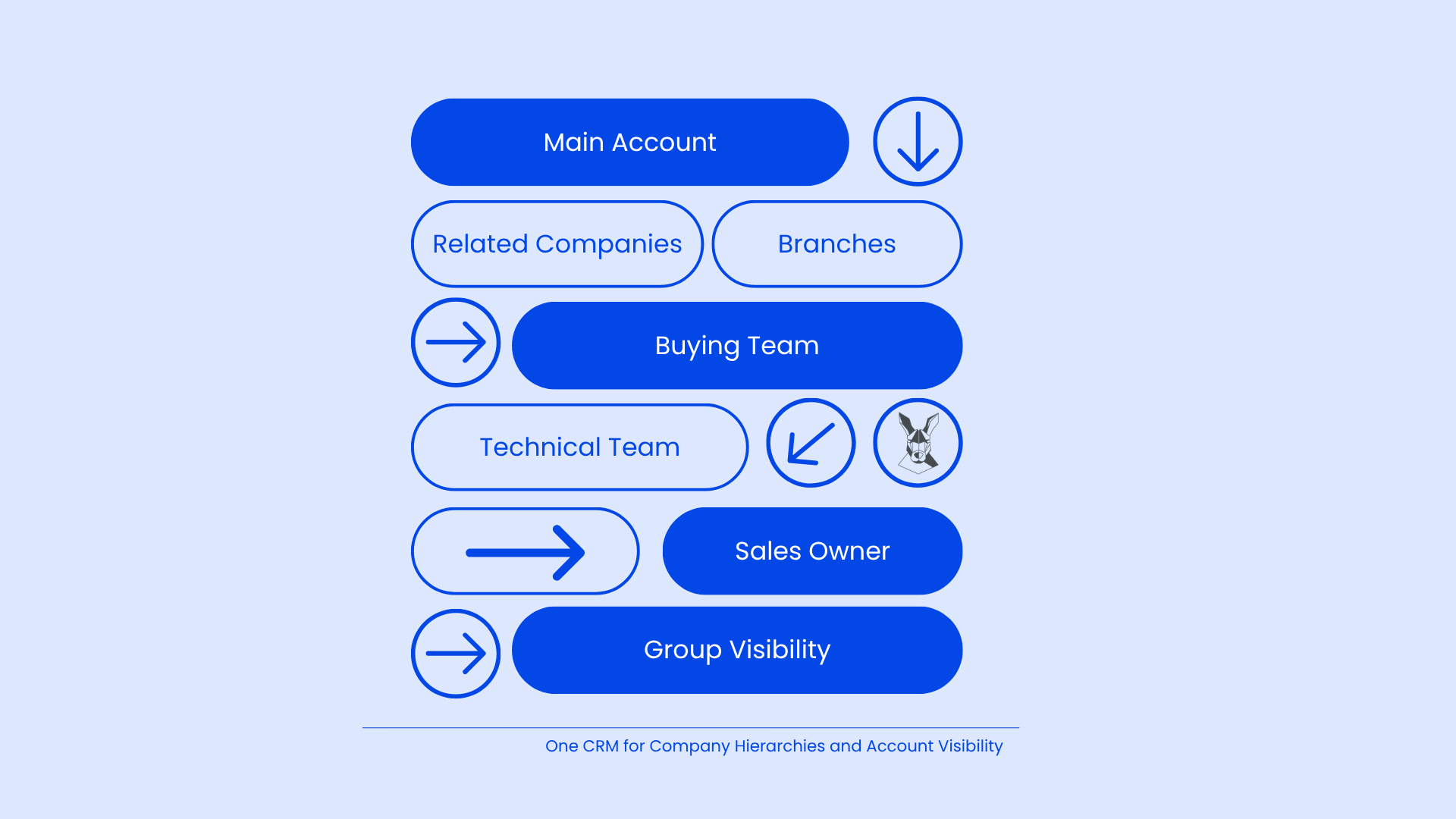
Company hierarchy management in CRM helps teams track group companies, branches, dealer structures, and multiple contacts in a more organized way.
WHY DOES COMPANY HIERARCHY MATTER IN B2B SALES?
B2B customer structures are not always made of one company and one contact. A group may include several companies, branches in different cities, regional buying teams, technical decision-makers, and headquarters managers who approve decisions.
If this structure is not managed correctly, sales teams struggle to see the customer as a whole. Company hierarchy management keeps parent companies, subsidiaries, branches, dealers, distributors, and project-based relationships organized in CRM.
WHAT HAPPENS WHEN GROUP COMPANIES ARE MISMANAGED?
A common problem is duplicate records for the same corporate group. One team may work with the headquarters while another team works with a branch. If these links are not created in CRM, total potential, open offers, and contact history appear fragmented.
The organization loses account visibility.
DUPLICATE COMPANY RECORDS
Duplicate company records cause the same customer to be followed under different names. Reports may show more customers than actually exist, offer history may be split, and account management becomes difficult.
Clear parent-child company relationships make portfolio tracking healthier.
DECISION-MAKER AND TECHNICAL CONTACT CONFUSION
B2B purchase decisions rarely depend on one person. Procurement, technical teams, field owners, finance approval, and senior management may all join at different stages.
If it is unclear which company, branch, or project each contact belongs to, conversations become scattered. Role, company, responsibility, and relationship type should be visible in CRM.
REGION AND ACCOUNT OWNERSHIP
For customers with multiple branches or countries, account ownership must be clear. Which representative owns which branch, who manages the headquarters account, and how related opportunities are reported should be defined in advance.
Hierarchy makes regional and branch responsibilities more visible.
HOW SHOULD COMPANY HIERARCHY BE DESIGNED IN CRM?
The relationship types should be clear first: parent company, subsidiary, branch, dealer, distributor, or project location. Each company record should be linked to the correct upper-level record, contacts should be stored under the right entity, and sales processes should follow this structure.
Offers, visits, projects, and tasks should also be linked to the right company level.
MANAGE COMPANY AND CONTACT STRUCTURES WITH KONGURU CRM
Konguru CRM helps manage companies, contacts, visits, offers, tasks, and projects in a central structure. B2B teams can evaluate customers together with related entities, contacts, and sales processes instead of isolated records.
Request a Konguru CRM demo to manage group companies, branches, and multiple contacts more systematically.